




Sports Injury Recovery: How Athletes Get Back to Training
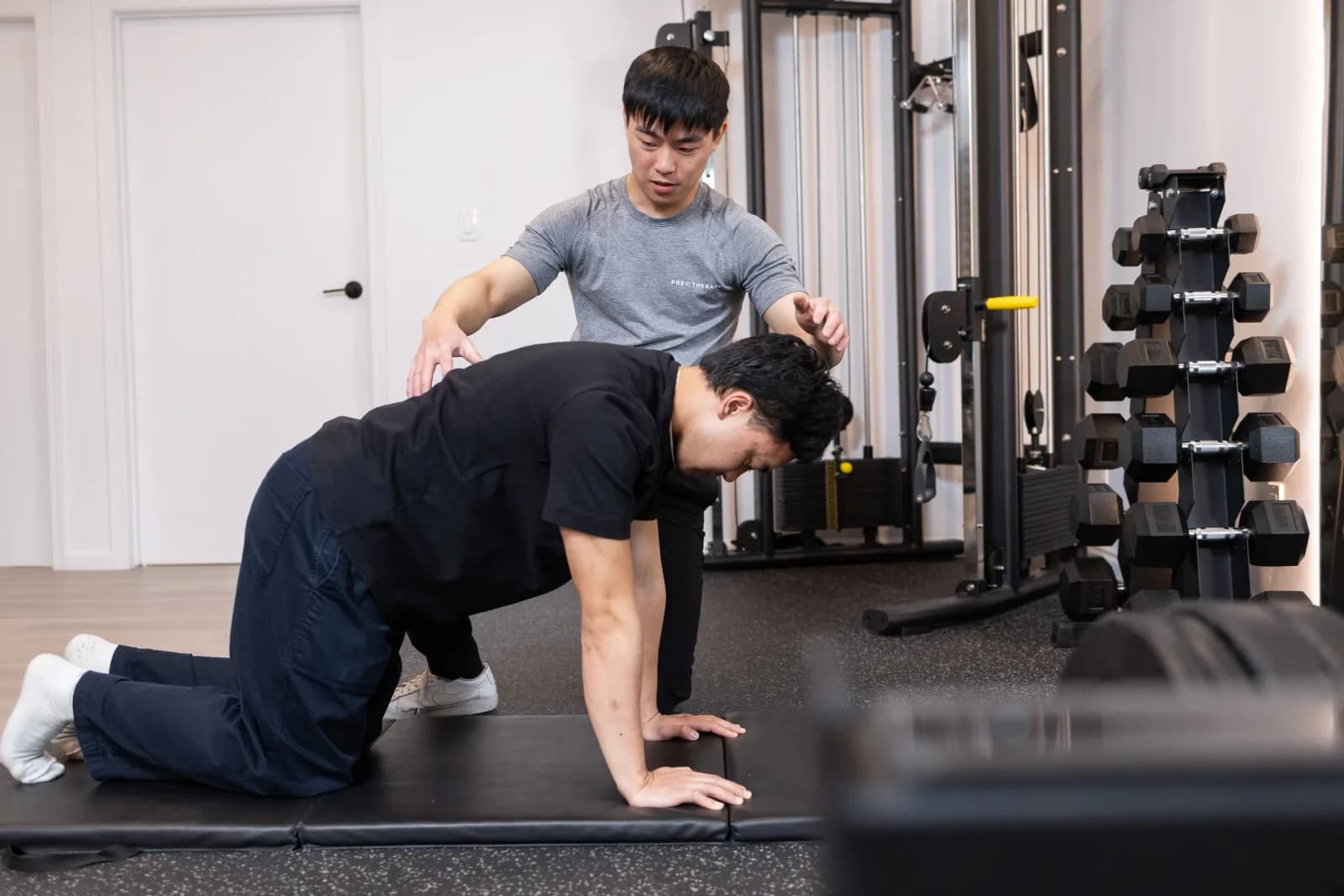
An injury that stops you from training is not the same problem as everyday back or neck pain. Athletes — whether you compete, fight, golf, run or just take the gym seriously — need more than pain relief. You need to know what actually went wrong, how to keep as much training as possible while it heals, and how to build back to full load without the injury coming back.
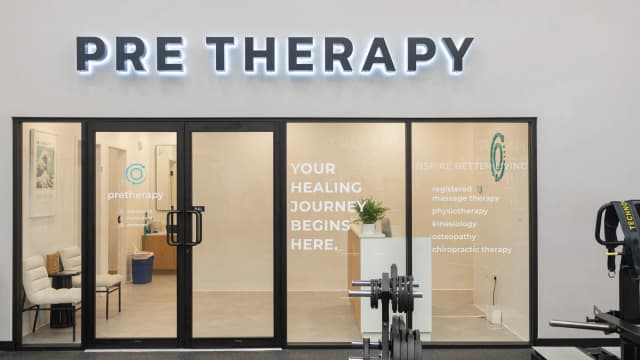
That progression is exactly how care at PRE Therapy is structured. Here is what sports injury recovery looks like across our four Metro Vancouver clinics, and which of our disciplines does what along the way.
Why sports injuries need a different kind of rehab
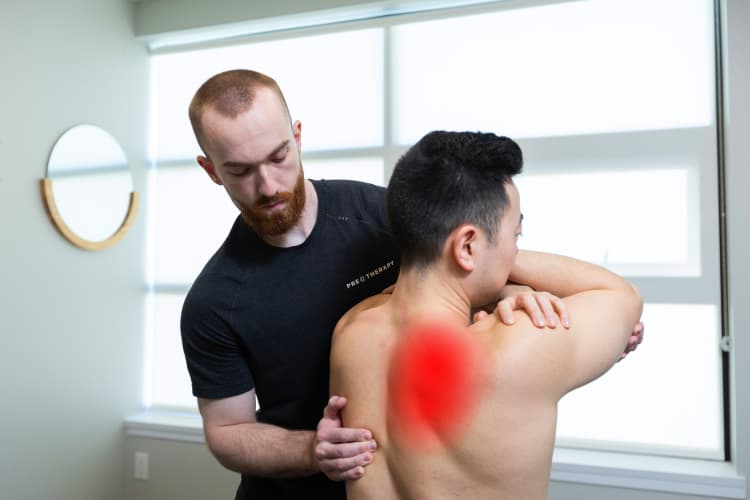
A desk worker with shoulder pain needs the pain gone. An athlete with the same shoulder needs the pain gone and the shoulder ready for load — pressing, grappling, swinging or swimming — at intensities far beyond daily life. Rehab that stops at “pain-free” leaves that gap wide open, which is why so many training injuries come back within months.
Sport rehab closes the gap in stages: settle the injury down, restore normal movement, then progressively rebuild strength and capacity until your body tolerates more than your sport demands. Skipping the last stage is the most common mistake we see in athletes who tried to rehab on their own.
From pain to performance: the three phases
Every plan at PRE Therapy moves through three phases. Pain management calms the injury and gets you moving without flaring it up. Restoration rebuilds normal joint range, tissue capacity and movement patterns. Evolution — the phase most clinics never get to — progressively loads you back toward full training: strength work, sport-specific movement and a return-to-sport plan, so you come back stronger than you left.
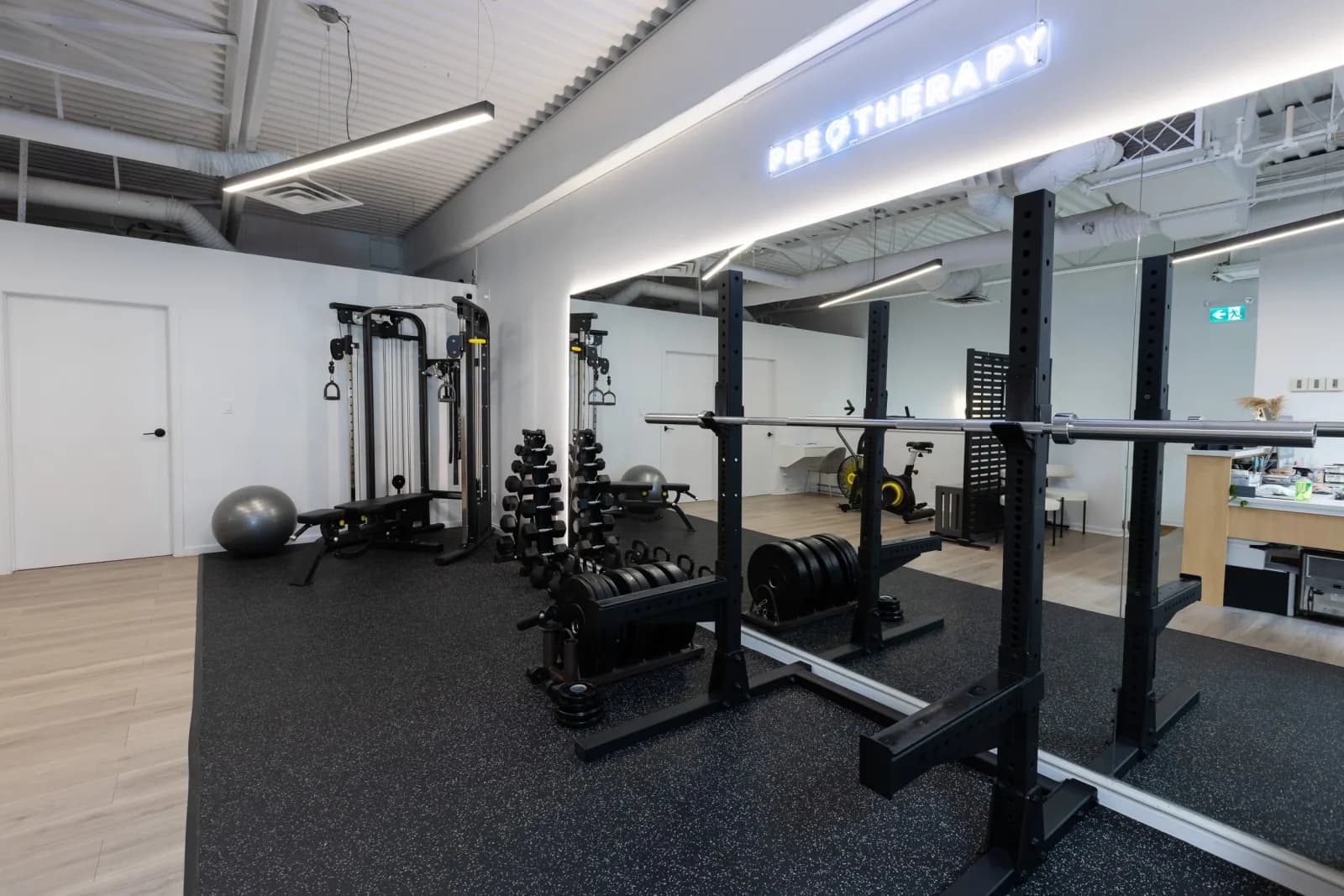
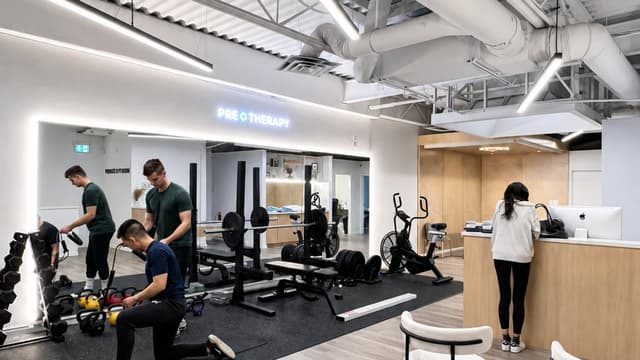
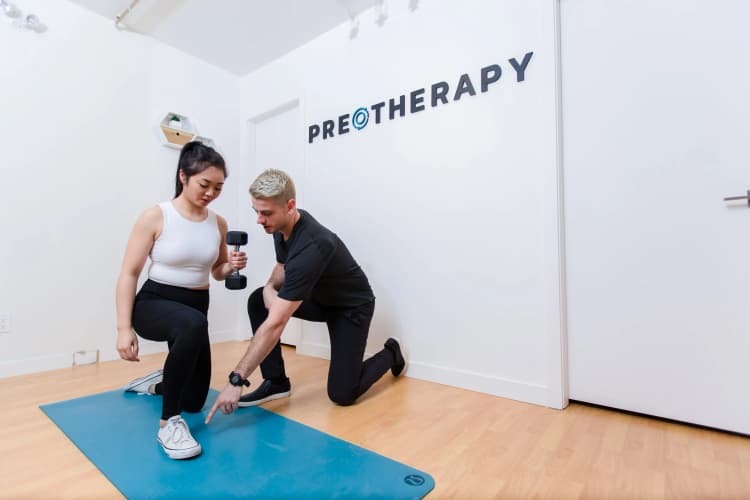
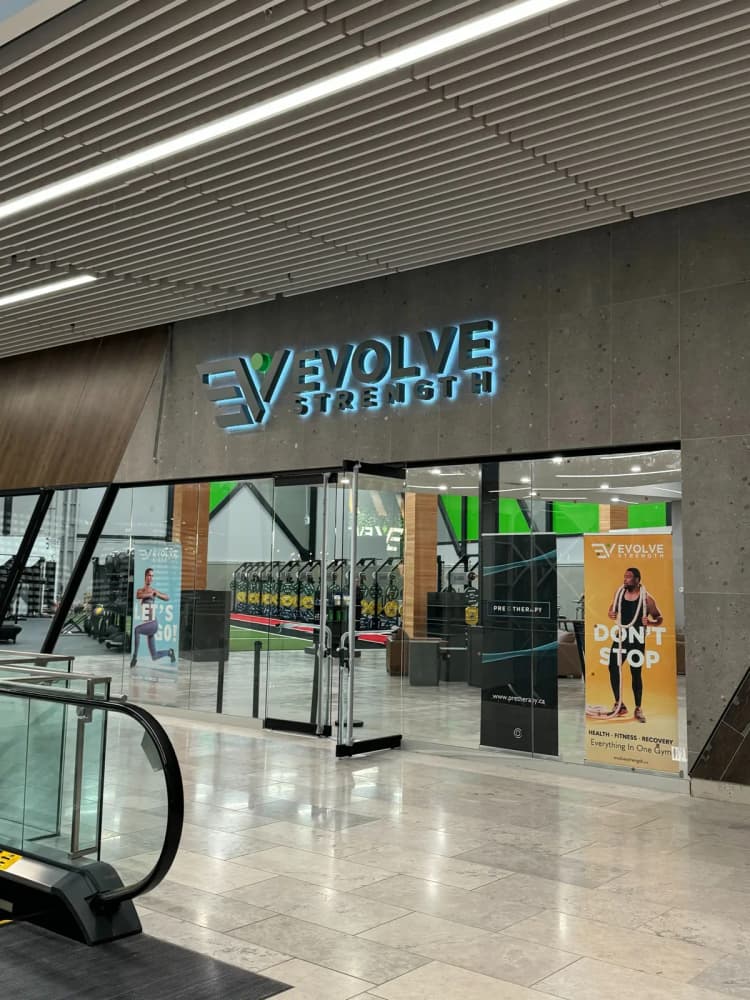
It helps that the gym is in the clinic. Active rehab here does not mean a printed sheet of exercises — it means coached sessions on real equipment, progressed week to week.
Which discipline does what for an athlete
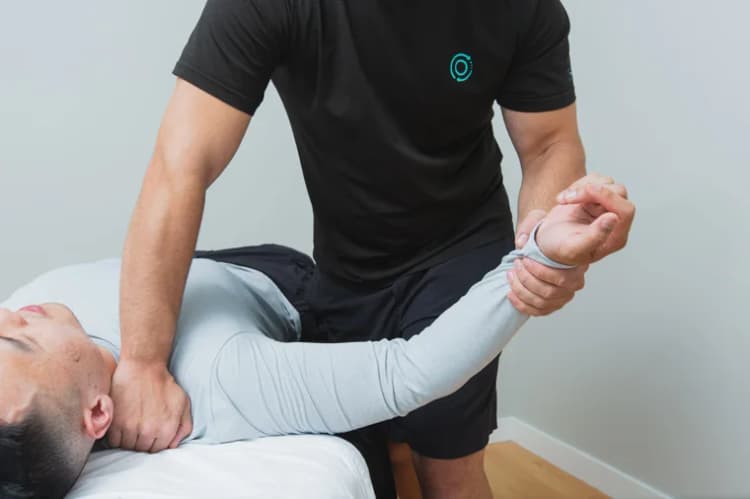
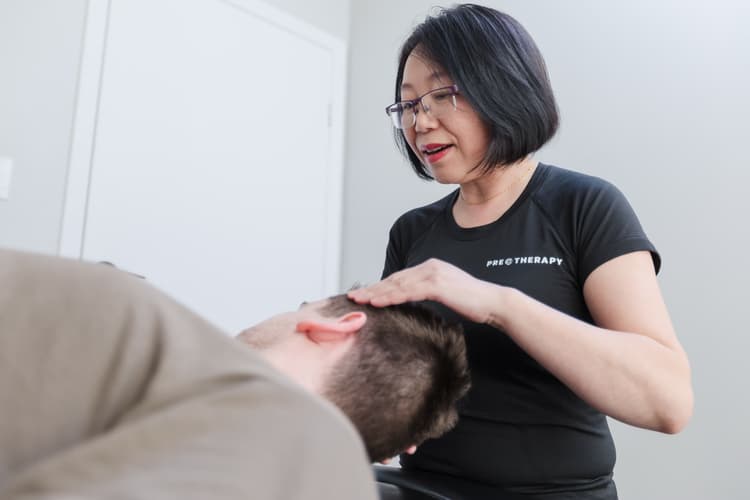
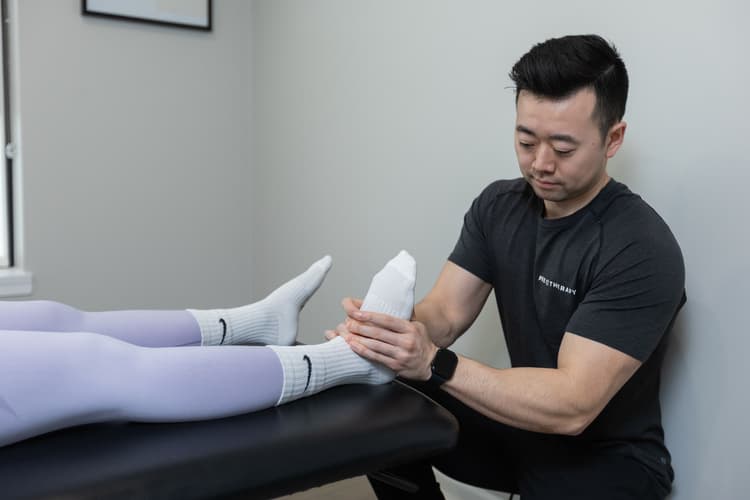
Physiotherapy — assessment and diagnosis of the injury, manual therapy, and structured loading plans; IMS dry needling for stubborn, overworked muscle tissue.
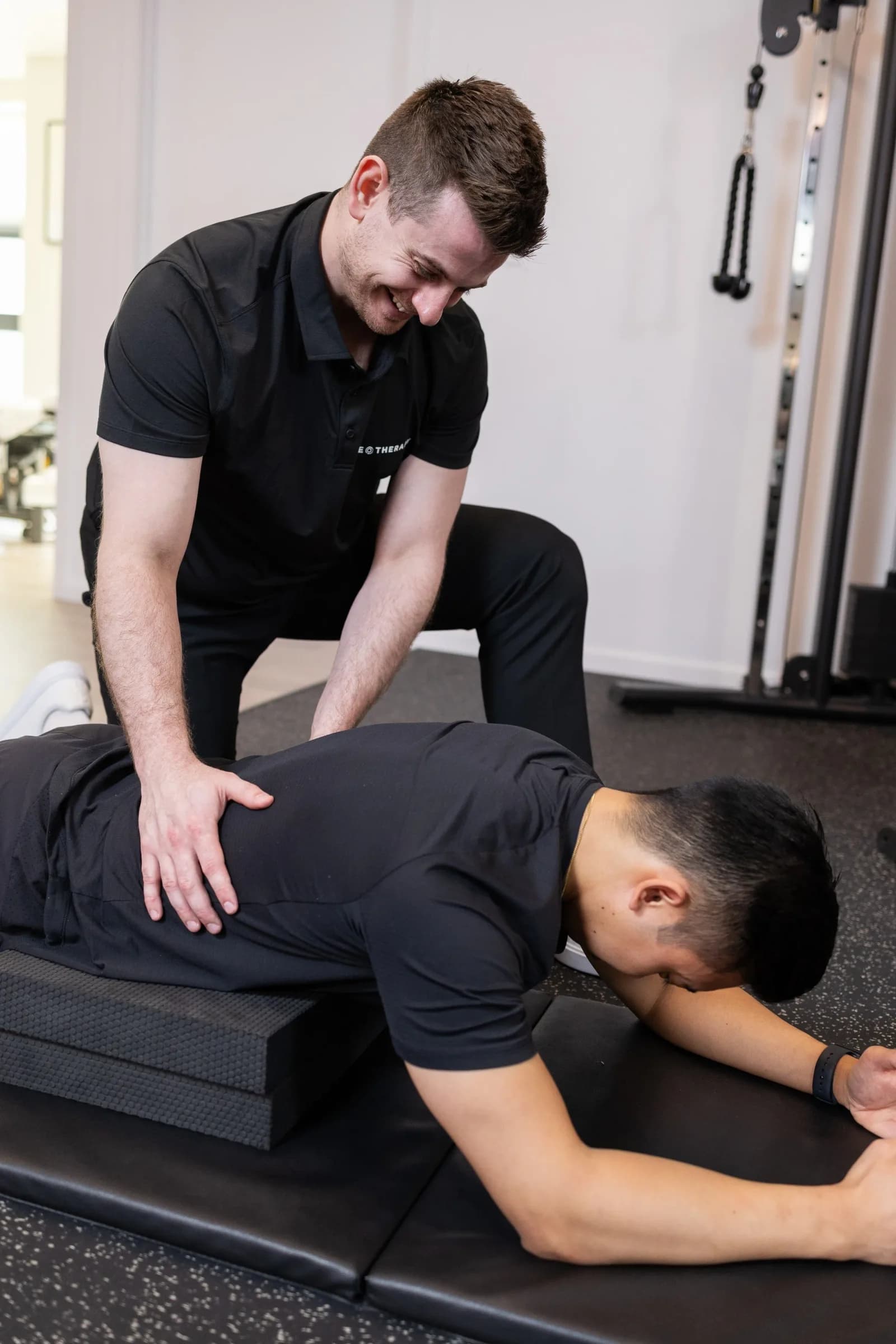
Kinesiology / active rehab — coached strength and movement sessions that rebuild capacity and confidence, from early-stage control work to return-to-sport loading. ICBC active rehab starts at a $0 user fee.
Registered massage therapy — recovery work between training blocks: easing overloaded tissue, managing training density and keeping you moving while volume is high.
Fascial stretch therapy — table-based assisted stretching for the mobility that lifting, fighting and rotational sports demand.
Chiropractic — joint mechanics and structural patterns that keep re-loading the same tissue.
Gym, court and combat sports
Most of our team lists athletes or sport-related injury among their focus areas — across strength and gym training, running, golf, basketball, volleyball, racquet sports, swimming and martial-arts or combat-sport training. That matters in practice: a therapist who understands what a training week looks like in your sport writes a very different plan than one who only knows “rest it.”
If you train hard, tell us what your week looks like when you book — sport, frequency, and what the injury is stopping you from doing. Your plan gets built around keeping you in your sport, not away from it.
Open 7 days a week across Burnaby (Laurel and Brentwood), Richmond and South Surrey, with direct billing to most insurers and ICBC coverage. Book online and start with a full assessment.
Frequently asked questions
Do you treat martial-arts and combat-sport training injuries?
Yes. Combat-sport training injuries — from striking, grappling and conditioning work — are among the sport injuries our team treats, alongside gym, court and endurance sports. Physiotherapists handle the diagnosis and loading plan, kinesiologists rebuild strength through coached active rehab, and RMTs and fascial stretch therapists manage recovery between sessions.
How soon after a sports injury should I book?
Sooner is better. An early assessment tells you what is actually injured, what you can safely keep training, and what needs to be offloaded — which usually means less total time away from your sport. You do not need a doctor's referral to see a physiotherapist.
Is active rehab covered by ICBC or extended benefits?
If you are in an ICBC claim, kinesiology active rehab and physiotherapy are pre-approved for the first 12 weeks at a $0 user fee. Outside ICBC, most extended health plans cover physiotherapy, massage therapy, chiropractic and kinesiology — we direct-bill most major insurers.
Can I keep training while I recover?
Usually, yes — modified. The goal of a good plan is to keep as much of your training as possible while the injured tissue is progressively rebuilt. Your therapist will tell you what to keep, what to swap and what to pause, and update that week to week as capacity returns.